Understanding Montessori
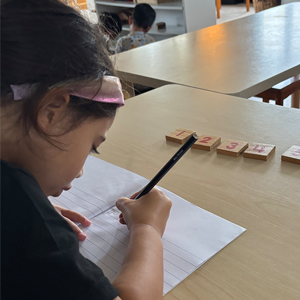
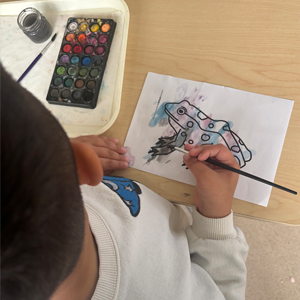
Montessori is based on the philosophy that children are naturally motivated to learn, and by optimising learning opportunities, children can learn independently at their own pace. Children are encouraged to make their own choices, and learn based on their current interests and curiosities, which supports children engaging in longer periods of learning. Teachers (whaea’s) act as mentors, observing children as they learn through experimentation and problem-solving, only intervening when needed. This helps children to build confidence and independence, as they are responsible for their own learning. It is a holistic approach, that focuses on the supporting the whole child, emotionally, developmentally, and socially, helping tamariki reach their full potential.
Key Elements of Montessori
Prepared Environments
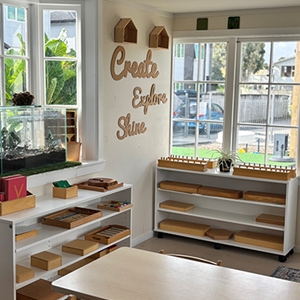
A prepared environment is purposely created to ensure an optimal learning environment for children. This includes separate designated areas for learning, eating, and play; easy access to learning materials which are child-sized so they can be easily used and easily accessible to children. The learning environment is designed to be clean, uncluttered, and create a calm atmosphere that doesn’t overwhelm children.
Montessori Resources
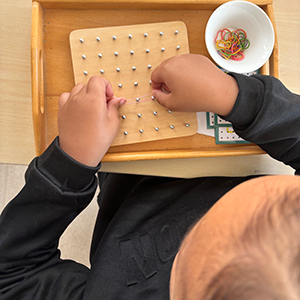
Resources for children are designed to support self-directed hands-on learning. They are designed to help learn practical life skills, such as buttoning clothing, pouring liquid, and use utensils, while also helping children to focus and build fine motor skills. Other resources are designed to teach concepts, such as math, language, and children’s different cultures.
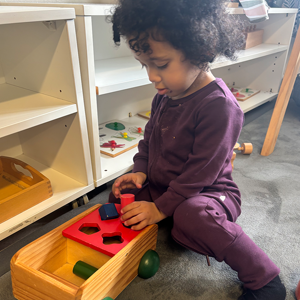
Freedom Within Limits
Ākonga have the freedom to move around the environment and engage with resources of their choosing for as long as they wish, if their behaviour is reasonable and they are being respectful of themselves, their peers, and the resources.
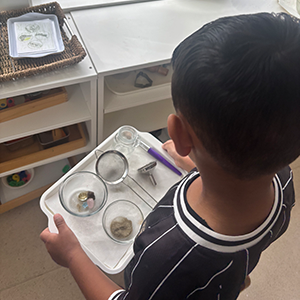
Modelling
This allows children to naturally emulate the behaviours they are observing, creating respectful, courteous, self-motivated children, and a quiet and calm educational environment.
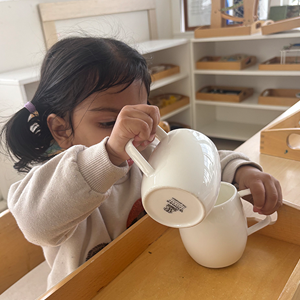
Real Resources
The Montessori approach focuses on use of real materials in the classroom. This includes real photographs rather than cartoons, and the use of metal cutlery, glass cups, and ceramic plates when eating. Montessori resources are similarly built out of real materials, such as wood, rather than easily breakable plastic materials.
FAQ About Montessori
Montessori has a more structured curriculum that focuses on individualised hands-on learning with specifically designed materials to teach concepts, and where teachers focus on aiding children only if needed. In comparison, other educational approaches are more unstructured, focusing on learning being a byproduct of children playing and creating freely. In these approaches, teachers take on a much more active role in leading group sessions of learning.
Of course! Montessori ensures dedicated time for learning, and dedicated time to play. Children are still have free time to do whatever they want, whether it be drawing, playing on the playground, pretend play, water play – and so much more.
Montessori is for everyone. There is a misconception that Montessori is only for the wealthy, however, The Wildlings believe Montessori should support those most at need, not those who can afford the most. We want to ensure tamariki have the best start in school, and Montessori approaches help give children the skills and values they need for school – and to thrive.